Your skin was fine. Then suddenly it wasn’t. Moisturizer that used to work now stings on application. Products you’ve used for years are causing redness. Your face feels tight five minutes after washing it. Breakouts are showing up in new places. Nothing seems to help and everything seems to irritate.
This is what a damaged skin barrier looks and feels like — and it’s far more common than most people realize. The good news is that the barrier repairs itself. The less good news is that most people accidentally keep damaging it while trying to fix it. Here’s what’s actually happening and what to do about it.
What Is the Skin Barrier and Why Does It Matter?
The skin barrier — technically called the stratum corneum — is the outermost layer of your skin. Think of it as a brick wall: skin cells are the bricks, and a mix of lipids including ceramides, cholesterol, and fatty acids acts as the mortar holding everything together. When this structure is intact, it keeps moisture in and irritants, bacteria, and allergens out.
When the barrier is damaged, those lipids break down and gaps form between the cells. Moisture escapes faster than the skin can replace it. Irritants that would normally stay out now get in. The skin becomes reactive, inflamed, and unpredictable. Conditions like eczema, rosacea, and contact dermatitis are all fundamentally skin barrier problems.
Signs Your Skin Barrier Is Damaged
These are the most reliable indicators:
- Stinging or burning when applying products that never bothered you before
- Persistent dryness and tightness that moisturizer relieves for only an hour or two
- Redness and sensitivity without an obvious cause
- Skin that looks dull and feels rough to the touch
- Sudden breakouts in areas that were previously clear
- Itching with no rash or visible cause
- Products that used to work well now causing irritation
- Taking longer than usual to recover from minor skin irritation
Three or more of these together is a strong signal that the barrier is compromised rather than just temporarily reactive.
What Damages the Skin Barrier
Most skin barrier damage is self-inflicted — and well-intentioned. Over-cleansing is the single most common cause. Washing the face more than twice a day, or using a cleanser that leaves skin feeling squeaky clean, strips the lipids the barrier depends on. Squeaky clean is not a good sign. It means the barrier lipids have been removed.
Other common culprits:
- Over-exfoliating — physical scrubs, AHAs, BHAs, and retinoids all weaken the barrier when used too frequently. Two to three times a week maximum for exfoliating actives, not daily
- Hot water — showers and face washing with hot water dissolve lipids faster than lukewarm water
- Fragrance in skincare — synthetic fragrance is the most common cause of contact dermatitis and barrier disruption. Both in products labeled for sensitive skin and in natural essential oils
- Introducing too many new products at once — the barrier can’t tell the difference between a good new ingredient and a bad one when it’s overwhelmed
- Environmental factors — low humidity, wind, cold weather, and air conditioning all accelerate moisture loss through a compromised barrier
- Stress — cortisol directly reduces ceramide production, which is why skin often goes haywire during stressful periods
How to Repair Your Skin Barrier — Step by Step
Step 1 — Strip Your Routine Back to Basics
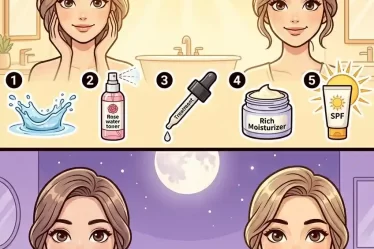
This is the most important step and the hardest for skincare enthusiasts to accept. Stop using actives entirely for 2 to 4 weeks. No retinoids, no AHAs, no BHAs, no vitamin C, no exfoliation of any kind. Your routine during repair should be three steps maximum: a gentle non-foaming cleanser, a simple moisturizer with barrier-supporting ingredients, and SPF in the morning. That’s it. Adding anything else slows repair.
Step 2 — Switch to a Barrier-Friendly Cleanser
Look for cream or oil cleansers with a pH between 4.5 and 5.5 — close to the skin’s natural pH. Avoid anything that foams heavily or contains sulfates. Cleanse with lukewarm water only. If your skin feels tight after cleansing, the cleanser is too stripping regardless of what the label says. Micellar water used without rinsing is actually a common barrier disruptor — always rinse it off.
Step 3 — Use a Moisturizer With the Right Ingredients
For skin barrier repair, three ingredient types work together: ceramides restore the lipid structure directly, hyaluronic acid draws moisture into the skin, and occlusives like petrolatum, squalane, or shea butter seal it in. A moisturizer that contains all three categories is more effective than separate products. Apply it to slightly damp skin — within 60 seconds of washing — to seal in that moisture before it evaporates.
Step 4 — Try Slugging at Night
Slugging means applying a thin layer of petrolatum — plain Vaseline works — as the last step in your evening routine. It creates an occlusive seal that dramatically reduces transepidermal water loss overnight. It sounds counterintuitive for acne-prone skin, but petrolatum is non-comedogenic — it sits on top of the skin and doesn’t clog pores. Most people see a noticeable difference in skin texture and hydration within 3 to 5 nights of slugging.
Step 5 — Add Barrier-Supportive Ingredients Slowly
Once the barrier has stabilized — usually 3 to 4 weeks into the stripped-back routine — you can begin reintroducing ingredients. One new product every 2 weeks maximum. Start with niacinamide, which actively supports ceramide production. Then centella asiatica, which has strong wound-healing and barrier-repair properties. Rosehip oil and sea buckthorn oil both contain fatty acids that structurally support the barrier. These come before any actives return.
Natural Ingredients That Actually Repair the Skin Barrier
Several natural ingredients have documented barrier-repair properties and are well tolerated even on compromised skin:
Oat extract (colloidal oatmeal): One of the few natural ingredients with FDA approval for skin barrier protection. Reduces inflammation, relieves itch, and supports lipid structure. Works for eczema, general sensitivity, and barrier repair alike
Rosehip seed oil: High in linoleic acid, an omega-6 fatty acid that’s a structural component of the skin barrier. Skin with a damaged barrier is often deficient in linoleic acid specifically
Aloe vera: Reduces inflammation and supports healing without adding occlusive weight. Good as a base layer under a heavier moisturizer during repair
Honey (raw): Has documented antimicrobial and humectant properties. Used as a gentle mask — applied for 10 to 15 minutes and rinsed — it supports healing without stripping
Sea buckthorn oil: Contains palmitoleic acid, which is naturally present in skin lipids and declines with age. One of the few plant oils that closely mirrors the skin’s own fatty acid profile
How Long Does Skin Barrier Repair Take?
A mildly damaged barrier can recover in 2 to 4 weeks with the right approach. Moderate damage takes 4 to 8 weeks. Severe, long-term damage — from years of aggressive skincare or chronic eczema — can take 3 to 6 months of consistent gentle care.
The timeline gets longer every time you introduce something irritating during the repair phase. Patience is genuinely the most important part of this process. The temptation to add something — an active, a new serum, an exfoliant — when skin starts looking better is where most people derail their own recovery.
The Short Version Stop all actives. Use a gentle non-foaming cleanser with lukewarm water. Apply a ceramide-rich moisturizer to damp skin. Slug at night with a thin layer of petrolatum. Add nothing new for 3 to 4 weeks. Then reintroduce niacinamide first, everything else second. The barrier repairs itself when you stop fighting it.