Most people reach for a pill the moment a headache starts. That works — until it doesn’t. Frequent painkiller use actually causes what’s called a rebound headache, where the medication itself starts triggering more pain. It’s a cycle a lot of people are stuck in without realizing it.
The good news is that most headaches respond well to natural interventions, especially if you catch them early. Some of these work within 15 to 20 minutes. Others are more about prevention than rescue — but knowing both gives you a complete toolkit.
Why You’re Getting Headaches in the First Place
Headaches rarely appear without a reason. Dehydration is the most common and most overlooked — even mild dehydration of around 2% body water loss is enough to trigger head pain in many people. Tension headaches come from muscle tightness in the neck, shoulders, and scalp, usually from stress or poor posture. Hormonal fluctuations cause headaches around ovulation and menstruation in a significant portion of women. And blood sugar drops — skipping meals or eating too much sugar — are a trigger most people never connect to their headaches.
Knowing your type matters because different headaches respond to different remedies. That said, most of the approaches below work across headache types.
9 Natural Remedies for Headaches That Actually Work
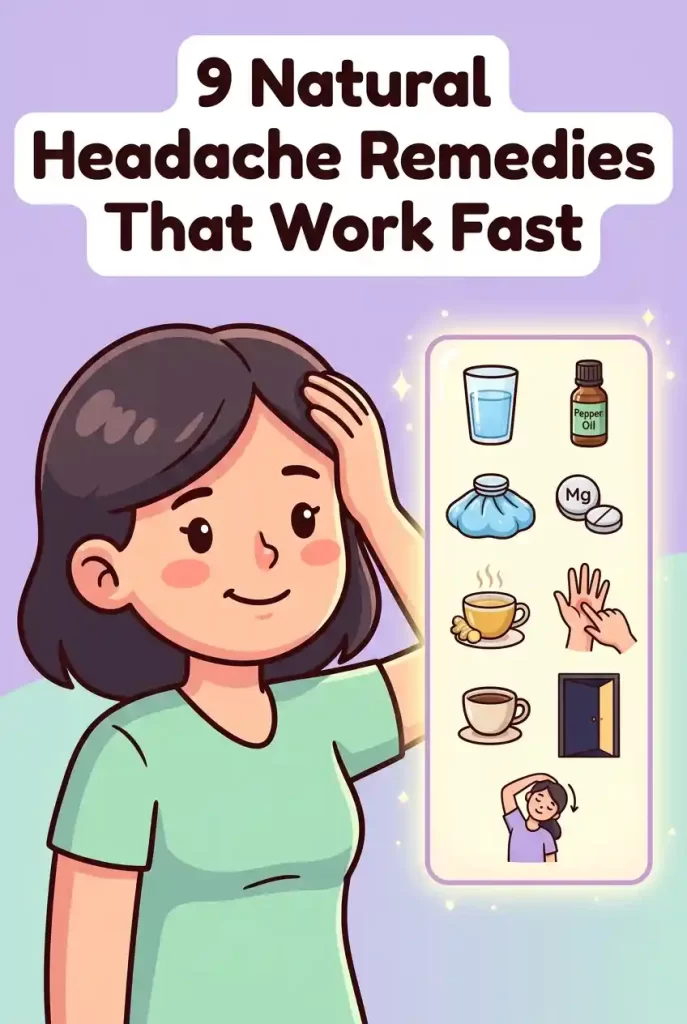
1. Drink Water First — Before Anything Else
This sounds too simple to mention, but dehydration headaches are genuinely that common. Drink 2 full glasses of water as soon as the headache starts. Add a small pinch of sea salt if the headache came after exercise or a hot day — you may need electrolytes, not just water. Give it 20 minutes. A surprising number of headaches resolve completely with just this.
2. Peppermint Oil on the Temples
Peppermint oil contains menthol, which relaxes muscles and creates a cooling sensation that interrupts pain signaling in the area. Apply a few drops to your temples, forehead, and the back of your neck. Avoid the eyes. The effect kicks in within about 15 minutes for tension headaches specifically. Several small studies have found it comparable to low-dose acetaminophen for tension headache relief — which is more than most people expect from an essential oil.
3. Cold or Warm Compress — Depending on the Type
Cold compresses work better for migraines and throbbing headaches — apply to the forehead or back of the neck for 15 minutes. The cold constricts blood vessels and reduces the pulsing sensation. Warm compresses work better for tension headaches — apply to the neck and shoulders to relax the muscles causing the pain. Using the wrong one makes it worse, so matching the compress to the headache type matters.
4. Magnesium — the Most Underused Headache Remedy
Low magnesium is directly linked to both tension headaches and migraines. Magnesium glycinate or magnesium citrate, taken at around 300 to 400mg when a headache starts, can shorten duration and reduce intensity. For people who get frequent headaches, taking magnesium daily as a preventive measure reduces headache frequency significantly within 4 to 6 weeks. This is one of the most evidence-backed natural headache interventions available.
5. Ginger Tea
Ginger has genuine anti-inflammatory properties and blocks prostaglandins — the compounds involved in pain and inflammation. For headaches, steep a 1-inch piece of fresh ginger in hot water for 8 to 10 minutes, add a squeeze of lemon and a small amount of honey. Drink slowly. It works best for nausea-accompanied headaches and migraines. Ginger tea bags work too, but fresh ginger is noticeably more effective.
6. Pressure Point at the Hand (LI4)
The space between your thumb and index finger — the fleshy webbing — contains a pressure point called LI4 that’s been used in acupressure for headache relief for centuries. Pinch this area firmly with the opposite thumb and index finger and apply steady pressure for 4 to 5 minutes. It can cause mild discomfort, which is normal. Most people notice the headache beginning to ease within a few minutes. Avoid this during pregnancy as LI4 can stimulate uterine contractions.
7. Caffeine — But Used Carefully
A small amount of caffeine — one cup of coffee or black tea — can relieve a headache by constricting dilated blood vessels, which is the mechanism behind many throbbing headaches. This is why caffeine is included in many over-the-counter headache medications. The catch is that using caffeine too often for headaches leads to caffeine withdrawal headaches when you skip it. Use this one occasionally, not as a daily fix.
8. Dark, Quiet Room and Actual Rest
For migraines especially, sensory input makes everything worse. A dark, quiet room isn’t just comfort — it removes the stimuli that amplify migraine pain. Combine this with a cold compress on the forehead and an eye mask if light sensitivity is a factor. This isn’t passive waiting — removing sensory load actively reduces the pain signal. Most migraine sufferers know this already; many tension headache sufferers underestimate how much it helps them too.
9. Neck and Shoulder Stretch Sequence
Tension headaches almost always involve tight muscles in the upper trapezius, neck, and base of the skull. A slow, deliberate stretch sequence takes about 5 minutes and makes a real difference. Tilt your head slowly toward each shoulder and hold for 30 seconds per side. Drop your chin to your chest and hold for 30 seconds. Gently roll your shoulders backward 10 times. Finish by placing both hands at the base of your skull and applying gentle upward pressure for 60 seconds. Do this slowly. You should feel the headache beginning to loosen within a few minutes.
Headache Prevention: What to Do Between Attacks
Treating a headache once it starts is one thing. Reducing how often they happen is the more valuable goal. The four changes that make the biggest difference:
- Drink at least 2 liters of water daily — consistent hydration prevents the most common headache trigger
- Take 300 to 400mg of magnesium glycinate every evening — results take 4 to 6 weeks but the reduction in headache frequency is consistent
- Fix your screen and posture setup — head-forward posture compresses the muscles at the base of the skull and is behind most chronic tension headaches in people who sit at desks
- Track your headaches for one month — note time of day, what you ate, sleep quality, stress level, and where in your cycle you are if relevant. Patterns become obvious quickly and show you your personal triggers
When a Headache Is Something More Serious
Natural remedies are appropriate for typical tension headaches and mild to moderate migraines. See a doctor promptly if your headache comes on suddenly and severely with no warning, if it’s accompanied by fever and stiff neck, if it follows a head injury, if it comes with vision changes or weakness on one side of the body, or if it’s the worst headache of your life. These patterns can indicate something that needs immediate medical attention.
The Short Version
Water first, always. Peppermint oil on the temples for tension headaches. Cold compress for migraines. Magnesium if you get them regularly. Ginger tea if nausea is involved. Pressure point on the hand for fast relief. These six cover the majority of headaches most people deal with — and none of them require a pharmacy.