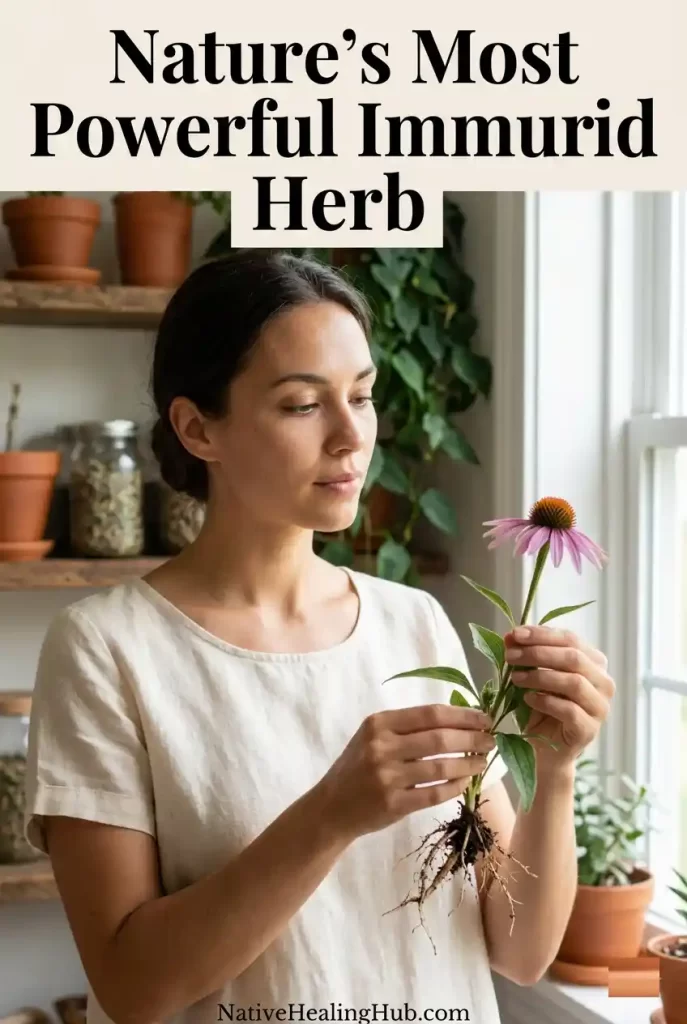
Long before echinacea became a bestselling supplement in health food stores, Native American tribes across the Great Plains were using it as their primary medicine for infections, wounds, and immune support. The Lakota, Cheyenne, and many other nations considered echinacea one of their most important medicinal plants — and used virtually every part of it, from root to flower.
Thank you for reading this post, don't forget to subscribe!Today, echinacea is one of the most researched herbs in the world, and the scientific evidence overwhelmingly supports what indigenous healers always knew: this plant is one of the most powerful natural immune boosters in existence.
What Is Echinacea?
Echinacea is a genus of flowering plants in the daisy family, native to North America. The most commonly used species for medicinal purposes are Echinacea purpurea, Echinacea angustifolia, and Echinacea pallida. The plant’s active compounds — including alkylamides, glycoproteins, and polysaccharides — work together to stimulate and modulate the immune system in ways that no single synthetic compound can replicate.
Indigenous healers did not isolate these compounds, of course. They understood the plant as a whole living medicine — and used the whole plant accordingly. Modern research is increasingly confirming that this whole-plant approach produces better results than isolated extracts.
4 Key Healing Benefits of Echinacea
1. Boosts Immune Function
Multiple clinical trials have shown that echinacea increases the production and activity of white blood cells — your immune system’s frontline defenders. Taking echinacea at the first sign of a cold can reduce its duration by up to 58% and cut the chance of developing a cold by 26%. These are not small effects — they represent a genuinely significant immune intervention.
2. Reduces Inflammation
Echinacea contains powerful anti-inflammatory compounds that help regulate the immune response and reduce chronic inflammation throughout the body. This makes it valuable not just during acute illness, but as a periodic wellness herb for anyone dealing with ongoing inflammatory conditions.
3. Fights Bacterial and Viral Infections
Laboratory studies show echinacea extracts can inhibit the growth of several harmful bacteria, including Streptococcus pyogenes and Haemophilus influenzae. It has also shown antiviral activity against influenza, herpes simplex, and other respiratory viruses. Indigenous healers applied echinacea poultices to infected wounds and used the root tea for throat and chest infections with consistent results that modern microbiology now explains.
4. Supports Upper Respiratory Health
Echinacea has been specifically and extensively studied for upper respiratory infections — colds, bronchitis, sinusitis, and sore throats. It reduces the severity of symptoms, shortens the duration of illness, and in many cases prevents a minor infection from developing into something more serious. This is exactly how indigenous healers used it — as a first-response medicine at the first sign of illness.
How To Use Echinacea — 3 Traditional Methods
Echinacea Tea (Most Traditional Method)
Steep 1–2 teaspoons of dried echinacea root or aerial parts in hot water for 10–15 minutes. Drink 2–3 cups per day at the very first sign of illness. The root produces a distinctive tingling sensation on the tongue — this is normal and actually indicates the presence of active alkylamides. Indigenous healers considered this tingling a sign of potency.
Echinacea Tincture (Most Potent Method)
Take 2–3 ml of echinacea tincture in a small amount of warm water, three times daily during illness. Tinctures extract a broader range of active compounds than water alone and are absorbed more quickly. This is the method most supported by clinical research.
Echinacea Capsules (Most Convenient Method)
Follow label dosing — typically 300–500mg of dried herb extract, three times daily. Look for products standardized to contain at least 4% echinacoside for consistent potency. Take at the first sign of illness and continue for 7–10 days.
Important Precautions
Echinacea is generally very safe for most adults when used as directed. However, people with autoimmune conditions like lupus, rheumatoid arthritis, or multiple sclerosis should consult a healthcare provider before use, as echinacea actively stimulates the immune system. Those with allergies to plants in the daisy family — including ragweed, chrysanthemums, and marigolds — should also use caution. Do not use continuously for more than 8–10 weeks at a time.
The Indigenous Wisdom Behind the Medicine
What makes echinacea remarkable is not just its biochemistry — it is the depth of indigenous knowledge that identified this plant’s healing power thousands of years before any laboratory could measure it. The fact that Native healers across multiple tribes, in different regions, independently arrived at echinacea as a primary medicine speaks to an accumulated wisdom that modern science is only beginning to fully appreciate.
When you brew echinacea tea at the first sign of a cold, you are participating in a healing tradition that stretches back thousands of years. That connection to ancestral wisdom is itself part of the medicine.
Conclusion
Echinacea is nature’s immune shield — proven by thousands of years of indigenous use and validated by decades of modern clinical research. If you do not have this herb in your natural medicine cabinet, now is the time to add it. Stock up before cold and flu season and give your immune system the ancient, powerful support it deserves.
For more plant medicine wisdom from indigenous healing traditions, visit NativeHealingHub.com 🌿