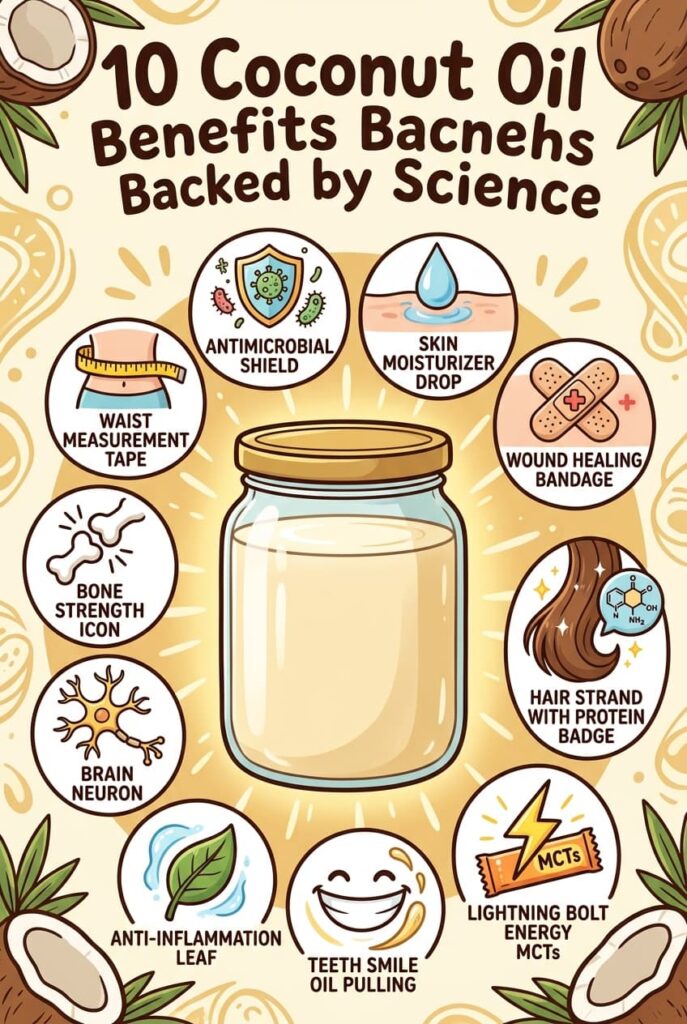
Coconut oil went from villain to superfood to somewhere in between — which is actually the most accurate place for it. The original anti-coconut oil position was based on its high saturated fat content. The superfood overcorrection ignored legitimate limitations. The truth is that coconut oil has specific, well-documented benefits that make it genuinely useful for certain purposes — and other situations where it’s not the best choice.
Thank you for reading this post, don't forget to subscribe!Here’s what the research actually shows, broken down by benefit category.
1. Antimicrobial Properties
Coconut oil is roughly 50% lauric acid, which the body converts to monolaurin — a compound with documented antiviral, antibacterial, and antifungal activity. This makes it effective topically for skin infections, fungal conditions, and as an oral antimicrobial in oil pulling. The antimicrobial effect is real and well-researched.
2. Skin Barrier Support
Coconut oil is one of the most studied natural moisturizers. A randomized controlled trial found it as effective as mineral oil for treating dry skin and eczema. Its molecular structure allows it to penetrate the hair shaft and skin surface better than most other plant oils. For dry, damaged, or eczema-prone skin, virgin coconut oil applied after bathing seals in moisture effectively.
3. Wound Healing
Applied to minor wounds, coconut oil accelerates healing through two mechanisms: its antimicrobial properties prevent infection, and its fatty acids support the skin repair process. Studies on burns and surgical wounds show faster healing with coconut oil compared to standard dressings in several trials.
4. Hair Protein Loss Prevention
This is one of coconut oil’s most unique properties. It’s one of the only oils that actually penetrates the hair shaft rather than just coating it. Studies show it reduces protein loss in both damaged and undamaged hair when applied before or after washing. This directly reduces breakage and improves hair strength over time.
5. Medium-Chain Triglycerides (MCTs) for Energy
The MCTs in coconut oil — particularly caprylic and capric acid — are metabolized differently than long-chain fatty acids. They go directly to the liver where they’re rapidly converted to energy rather than stored as fat. This is why coconut oil is popular in keto and low-carb diets. The energy effect is real, though the weight loss claims are often overstated.
6. Oral Health via Oil Pulling
Swishing coconut oil for 10 to 20 minutes reduces Streptococcus mutans (the main cavity-causing bacteria) and reduces plaque and gum inflammation comparably to chlorhexidine mouthwash in several studies. The lauric acid’s antimicrobial action is the mechanism. A well-documented, practical benefit.
7. Reducing Inflammation
Several studies show that virgin coconut oil reduces inflammatory markers. The antioxidants in unrefined coconut oil — particularly tocopherols and polyphenols — contribute to this effect. Refined coconut oil has fewer of these compounds. For anti-inflammatory benefit, virgin unrefined is the right choice.
8. Alzheimer’s Disease Support (Emerging Research)
MCTs from coconut oil convert to ketones in the liver. Ketones can serve as an alternative fuel for brain cells when glucose metabolism is impaired — which is a feature of Alzheimer’s disease. Early research is promising but not yet conclusive. This is an area worth watching rather than a confirmed benefit.
9. Bone Health
Animal studies and limited human research suggest coconut oil reduces oxidative stress on bones and may improve bone density. The antioxidant content is thought to be the mechanism. More research is needed, but the existing evidence is interesting enough to mention.
10. Fat Distribution and Waist Circumference
Two studies found that daily coconut oil consumption reduced waist circumference compared to soybean oil over 12 weeks, without weight gain. The proposed mechanism is the MCT content affecting fat storage patterns. The effect is modest but consistent across both studies.
Virgin vs Refined — Which to Buy
Virgin (unrefined) coconut oil retains more antioxidants, polyphenols, and active compounds. It has a coconut smell and flavor. Refined coconut oil is processed at high heat, removing most beneficial compounds beyond the fatty acids. For health use: always virgin unrefined. For cooking at high heat: refined is more stable.
The Short Version
Antimicrobial skin and oral use, hair protein protection, skin barrier repair, and MCT energy — these are the four strongest, most consistent coconut oil benefits. Use virgin unrefined for everything except high-heat cooking. Apply to skin after bathing, use for oil pulling, apply to hair before washing.