Bloating is one of the most common digestive complaints — and one of the most misunderstood. Most people reach for antacids or gas drops and wonder why the bloat keeps coming back. The problem is that bloating usually has a specific cause, and treating the symptom without addressing the cause means it returns every time.
Thank you for reading this post, don't forget to subscribe!The good news: most bloating responds quickly to the right approach. Here’s the complete guide — causes, food triggers, anti-bloat drinks, and the yoga moves that physically release trapped gas.
What Actually Causes a Bloated Belly
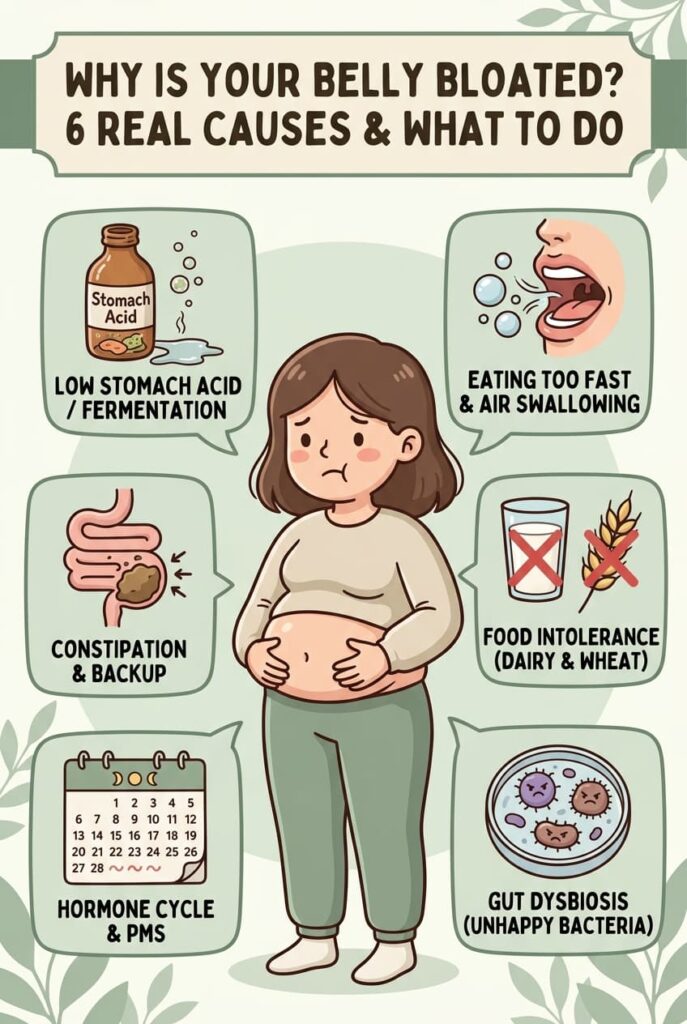
Low stomach acid: The most overlooked cause. When stomach acid is insufficient, food ferments in the stomach instead of being properly digested — producing gas. Antacids make this worse, not better.
Eating too fast: Swallowing air with food is a direct cause of gas and bloating. Eating quickly also triggers less thorough chewing, leaving larger food particles that ferment in the gut.
Food intolerances: Lactose, gluten, fructose, and FODMAPs (fermentable carbohydrates) are the most common. Bloating that occurs 30 to 90 minutes after eating specific foods suggests intolerance.
Gut dysbiosis: An imbalanced gut microbiome over-ferments food, producing excess gas. Chronic bloating despite eating well often points to this.
Hormonal fluctuations: Estrogen promotes water retention and slows gut motility. Bloating that worsens before periods is hormonal rather than dietary.
Constipation: Backed-up stool creates gas buildup and abdominal pressure. Bloating that improves after a bowel movement confirms this cause.
Bloated Belly Food — What to Eat and What to Avoid
Foods that commonly cause bloating and gas:
- Beans and lentils — contain galacto-oligosaccharides that gut bacteria ferment heavily
- Cruciferous vegetables (raw) — broccoli, cauliflower, cabbage produce gas when fermented. Cooking reduces this significantly
- Dairy — lactose intolerance affects up to 65% of adults globally
- Carbonated drinks — direct gas introduction into the digestive system
- Sugar alcohols — sorbitol, mannitol, xylitol in sugar-free products are heavily fermented
- Onions and garlic — high in fructans, a FODMAP that causes bloating in sensitive individuals
- Wheat — fructans in wheat are a common bloating trigger even in people without celiac disease
Foods that reduce bloating:
- Ginger — reduces intestinal spasm and gas production
- Peppermint — relaxes gut smooth muscle and reduces trapped gas
- Papaya — contains papain enzyme that breaks down proteins and reduces bloating after protein-heavy meals
- Cucumber — high water content, reduces water retention bloating
- Fennel seeds — direct antispasmodic effect on the gut, traditionally used post-meal for gas
- Banana (ripe) — potassium reduces water retention; the soluble fiber feeds beneficial bacteria
- Cooked leafy greens — easier to digest than raw, provide magnesium that supports gut motility
4 Bloated Belly Drinks That Relieve Bloating Fast
Peppermint and Fennel Tea
Steep 1 teaspoon peppermint and half a teaspoon fennel seeds together for 10 minutes. Drink after meals. Peppermint relaxes smooth muscle. Fennel breaks up gas bubbles. Relieves bloating within 15 to 20 minutes for most people.
Ginger Lemon Water
Fresh ginger (1 inch) steeped in hot water with lemon juice. Drink 20 minutes before meals to prime digestion, or immediately when bloating occurs. Ginger reduces intestinal spasm and stimulates digestive enzymes.
ACV Pre-Meal Drink
1 tablespoon raw ACV in a large glass of warm water, 15 minutes before eating. Increases stomach acid production — addressing one of the most common but overlooked causes of bloating.
Cucumber and Mint Water
Sliced cucumber and fresh mint steeped in cold water for 1 to 2 hours. Drink throughout the day. Cucumber’s potassium content reduces water retention bloating. Mint eases gut spasm. Best for hormonal bloating and water retention.
3 Bloated Belly Yoga Poses That Release Gas Fast
1. Wind-Relieving Pose (Pavanamuktasana)
Lie on your back. Pull both knees to your chest and hug them tightly. Rock gently side to side for 30 seconds. Then extend one leg while keeping the other pulled in. Hold 30 seconds per side. The name translates directly from Sanskrit — this pose physically compresses the ascending and descending colon, pushing trapped gas through. Noticeably effective within 2 to 3 minutes.
2. Child’s Pose with Belly Pressure
Kneel and lower your forehead to the floor with arms extended forward. Belly presses against thighs. Hold for 1 to 2 minutes while breathing deeply. The gentle compression on the abdomen massages the gut and promotes peristalsis — the muscular movement that moves gas and food through the digestive tract.
3. Supine Spinal Twist
Lie on your back. Extend arms out to the sides. Draw one knee to your chest and let it fall across the body to the opposite side while keeping your shoulder on the floor. Hold 1 minute per side. The twist compresses and then releases the gut, creating a wringing effect that stimulates gut motility and helps move trapped gas.
The Short Version Identify your cause — is it food intolerance, low stomach acid, hormonal, or constipation? Address it specifically. Drink peppermint and fennel tea after meals. ACV before meals if low stomach acid is suspected. Wind-relieving pose when acute bloating hits. Avoid your personal trigger foods for 2 weeks and track the change.