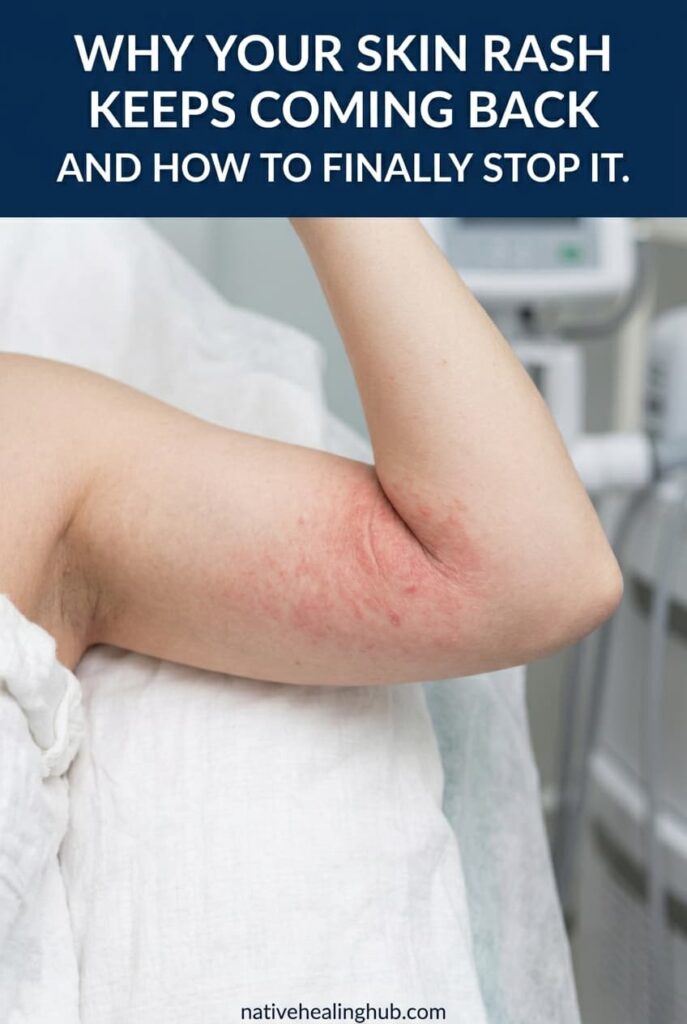
A rash in a skin fold that clears up and then returns within days or weeks is one of the most frustrating skin problems to deal with. Most people treat the symptoms — the redness, the itch, the raw skin — without addressing why it keeps coming back. That’s the part most guides skip.
Thank you for reading this post, don't forget to subscribe!Skinfold rash (medically called intertrigo) forms where skin rubs against skin and moisture gets trapped. The warm, wet environment creates ideal conditions for bacteria, yeast, and fungal overgrowth. Until the underlying environment is changed, it will keep returning regardless of what cream you apply.
Why Skinfold Rash Keeps Coming Back
Moisture never fully dries: Skin folds trap sweat and don’t get adequate airflow. The moisture stays warm and creates a breeding ground for Candida yeast and bacteria. Treating the rash without addressing ongoing moisture means it returns within days.
Candida yeast overgrowth: Most recurring skinfold rashes have a fungal component — Candida thrives in warm moist skin folds. If your rash has a bright red color, satellite spots around the edges, or intense itching, yeast is almost certainly involved.
Bacterial secondary infection: Moisture-damaged skin allows bacteria — particularly Staphylococcus and Streptococcus — to enter. This produces a different type of rash: more oozing, crusting, and odor than pure yeast.
Friction without protection: Skin-on-skin rubbing causes constant irritation that prevents healing. Without reducing friction, the skin can’t repair itself even when infection is controlled.
High blood sugar: Elevated glucose creates an environment where yeast thrives significantly more. Recurring yeast-related skin fold rashes that don’t respond to treatment are sometimes the first sign of insulin resistance or prediabetes.
Natural Treatments That Work
1. Keep It Dry — The Most Important Step
Apply cornstarch or arrowroot powder to the fold after cleaning and drying. Both absorb moisture without the talc concerns of traditional baby powder. Apply a thin layer after every shower and reapply midday if sweating. This single step reduces recurrence more than any topical treatment because it addresses the root cause — the moisture environment.
2. Coconut Oil — Antifungal and Barrier
Virgin coconut oil contains lauric acid which converts to monolaurin — a compound with documented antifungal activity against Candida. Apply a thin layer to the clean dry fold twice daily. It simultaneously treats yeast overgrowth and creates a mild protective barrier that reduces friction. Works best for yeast-component rashes.
3. Apple Cider Vinegar Wash
Dilute ACV 1:3 with water. Apply with a cotton ball to the affected fold, leave for 5 minutes, then pat completely dry. ACV’s acidity creates an environment hostile to both Candida and bacteria. Use once or twice daily during active rash. Always dry completely afterward — leaving moisture in the fold defeats the purpose.
4. Tea Tree Oil
Tea tree oil has documented antifungal and antibacterial activity. Dilute 3 to 4 drops in 1 tablespoon of coconut oil. Apply to the rash twice daily. The combination addresses both fungal and bacterial components simultaneously. Do not apply undiluted — it causes chemical burns on already irritated skin.
5. Zinc Oxide Paste
Zinc oxide creates a protective barrier between skin surfaces, reduces friction, and has mild antimicrobial properties. Apply a thin layer after cleaning and drying the fold. This is what most diaper rash treatments use — and the mechanism is directly applicable to intertrigo. Available in most pharmacies without prescription. Leave on rather than washing off between applications.
6. Aloe Vera
Pure aloe vera gel applied to the rash reduces inflammation and promotes healing of raw irritated skin. It also has mild antifungal properties. Apply after cleaning. Let it dry completely before allowing skin surfaces to come back into contact. Best used as a healing agent once the infection is controlled rather than as primary treatment.
7. Neem Oil
Neem oil has strong antifungal and antibacterial compounds — azadirachtin and nimbidin — that are effective against the organisms most commonly responsible for skinfold rash. Dilute with a carrier oil (1 part neem to 3 parts coconut or jojoba). Apply once daily. The smell is strong but washes off easily. One of the most effective natural options for stubborn recurring rashes.
Daily Routine to Prevent Recurrence
- Shower or wash the fold daily — use a gentle fragrance-free cleanser
- Dry completely — use a hair dryer on low cool setting if needed, or pat with a soft cloth
- Apply cornstarch or arrowroot powder immediately after drying
- Apply coconut oil or zinc oxide paste as a protective layer
- Wear breathable natural fiber clothing — cotton or bamboo, never synthetic
- Change clothes if sweating — moisture-soaked fabric against a skin fold undoes all treatment
- Reduce sugar intake if rash is yeast-driven — yeast feeds on glucose
When to See a Doctor
See a doctor if the rash spreads beyond the fold rapidly, if there is significant swelling or warmth suggesting cellulitis, if you develop fever, if the rash doesn’t improve at all after 1 week of consistent natural treatment, or if the rash has a distinct odor suggesting bacterial infection requiring antibiotics. Recurring yeast-related skinfold rashes that don’t respond to antifungal treatment are worth checking blood sugar levels.
The Short Version
Keep the fold dry — cornstarch after every shower. Coconut oil for antifungal protection. ACV wash once daily during active rash. Tea tree oil diluted for stubborn cases. Zinc oxide paste as barrier. The rash keeps coming back because the environment hasn’t changed — moisture, friction, and sometimes yeast. Address all three simultaneously and it stops recurring.