Estrogen dominance doesn’t necessarily mean estrogen is too high. It means estrogen is high relative to progesterone — either because estrogen is elevated, progesterone is low, or both. This ratio imbalance affects a wide range of body functions, which is why the symptom list is so long and so varied that most women spend years getting misdiagnosed or dismissed.
Thank you for reading this post, don't forget to subscribe!Understanding the pattern of symptoms — rather than trying to address each one separately — is what finally helps most women identify what’s actually happening.
What Causes Estrogen Dominance
Sluggish liver: The liver is responsible for clearing used estrogen. When liver function is impaired by alcohol, processed food, or medication overload, estrogen recirculates instead of being eliminated
Xenoestrogens: Synthetic estrogen-mimicking compounds in plastics, synthetic fragrance, conventional cosmetics, and pesticide residues bind to estrogen receptors and add to the total estrogen load
Low progesterone: Chronic stress steals pregnenolone — the building block of progesterone — causing progesterone to drop while estrogen stays the same. The ratio shifts toward estrogen dominance
Gut dysbiosis: An enzyme called beta-glucuronidase produced by certain gut bacteria deconjugates estrogen that has been processed for elimination — causing it to be reabsorbed
Excess body fat: Fat tissue contains aromatase enzyme which converts androgens to estrogen — higher body fat means higher estrogen production
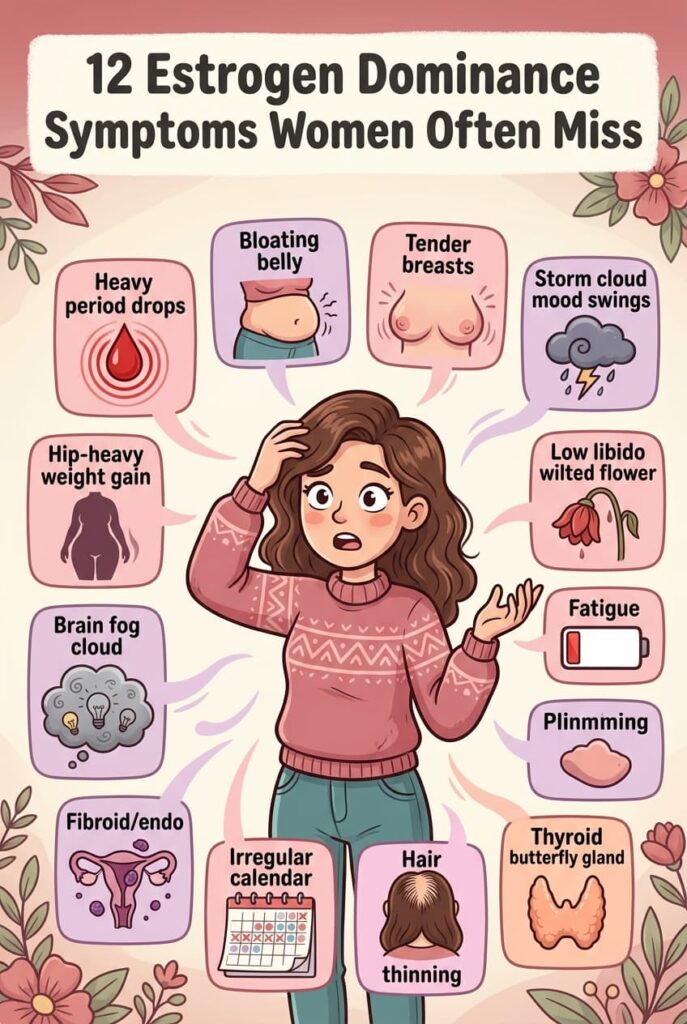
12 Estrogen Dominance Symptoms
1. Heavy or Painful Periods
Excess estrogen thickens the uterine lining more than normal, leading to heavier bleeding and more intense cramping. Passing clots and flooding are common reports.
2. Bloating and Water Retention
Estrogen promotes sodium and water retention. Bloating that worsens in the luteal phase (days 15 to 28) and around menstruation is a reliable estrogen dominance pattern.
3. Breast Tenderness and Swelling
Estrogen-sensitive breast tissue responds to excess estrogen with cyclical tenderness, swelling, and sometimes fibrocystic changes. Tenderness that increases premenstrually is the classic pattern.
4. Mood Swings, Anxiety, and Irritability
Estrogen and progesterone both influence serotonin and GABA. When estrogen dominates without progesterone’s calming balance, mood instability, anxiety, and premenstrual rage are common.
5. Weight Gain, Especially Hips and Thighs
Estrogen directs fat storage to the hips, thighs, and buttocks. Weight that concentrates in these areas despite no dietary changes is a hormonal pattern, not a calorie problem.
6. Low Libido
Progesterone supports libido in women. When it’s suppressed by estrogen dominance, sexual drive declines gradually and persistently.
7. Fatigue and Low Energy
The hormonal imbalance disrupts thyroid function and cortisol rhythm, both of which affect energy. Fatigue that’s worst in the week before menstruation is particularly associated with estrogen dominance.
8. Brain Fog
Excess estrogen without progesterone’s counterbalance impairs cognitive function, word recall, and concentration — particularly in the luteal phase.
9. Fibroids and Endometriosis
Both conditions are estrogen-dependent. Fibroids grow in response to estrogen. Endometriosis tissue also responds to estrogen. Existing fibroids or endometriosis worsening over time is often driven by unaddressed estrogen dominance.
10. Irregular Periods or Spotting
Estrogen dominance disrupts the normal hormonal rhythm of the cycle, leading to irregular timing, mid-cycle spotting, or cycles that become progressively shorter or longer.
11. Hair Loss
Excess estrogen relative to progesterone creates a hormonal environment that can increase androgen sensitivity at the follicle — contributing to diffuse thinning particularly at the crown.
12. Thyroid Disruption
Estrogen dominance increases thyroid-binding globulin, which reduces the amount of free thyroid hormone available. This can cause hypothyroid symptoms — weight gain, fatigue, cold sensitivity, constipation — even when TSH appears normal on standard tests.
Natural Remedies for Estrogen Dominance
Support Liver Estrogen Clearance
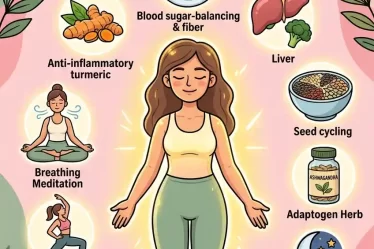
Cruciferous vegetables (broccoli, cauliflower, Brussels sprouts) contain DIM (diindolylmethane) which supports Phase 2 liver detoxification of estrogen. Milk thistle supports liver cell function. Reduce alcohol completely during active estrogen dominance — even small amounts impair estrogen metabolism significantly.
Fix Gut Health
A healthy gut microbiome ensures processed estrogen stays eliminated rather than being reabsorbed. Reduce beta-glucuronidase activity by eating fermented foods daily, increasing dietary fiber, and considering calcium-d-glucarate supplementation (500mg daily) — a compound that binds estrogen for elimination.
Reduce Xenoestrogen Exposure Switch from plastic to glass or stainless food storage. Choose fragrance-free personal care products. Wash conventional produce thoroughly. These three changes remove the biggest xenoestrogen sources.