Hair grows about half an inch per month on average. That rate is largely genetic — but genetics set a ceiling, not a floor. Most people’s hair grows slower than their genetic potential because of factors they’re actively getting wrong: nutrition gaps, scalp health neglect, mechanical damage, and stress. Addressing these consistently moves you closer to your maximum growth rate.
Thank you for reading this post, don't forget to subscribe!None of these tips produce overnight results. Hair growth is slow by nature. What they produce is consistent improvement that becomes visible at 8 to 12 weeks and significant at 6 months.
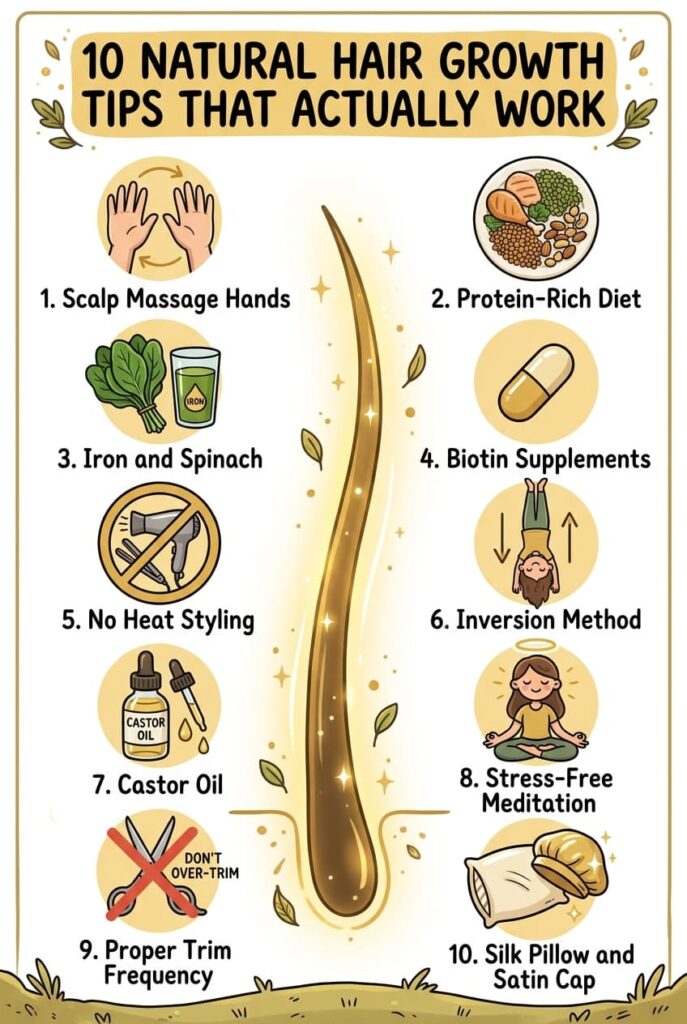
1. Scalp Massage Daily — 4 Minutes
A 2016 study found that 4 minutes of daily scalp massage increased hair thickness over 24 weeks. The mechanism is increased blood flow delivering more nutrients to follicles. Use fingertips in firm circular motions across the entire scalp. Do it dry, with oil, or in the shower. The massage itself is the active component — the oil enhances it but isn’t required.
2. Protein at Every Meal
Hair is made almost entirely of keratin, which is a protein. Insufficient dietary protein directly reduces hair growth rate and causes shedding. Aim for 0.8 to 1 gram of protein per pound of body weight daily. Eggs, fish, chicken, legumes, and Greek yogurt are the most effective sources. Protein deficiency is one of the most overlooked causes of slow hair growth.
3. Iron and Ferritin Levels
Low ferritin (stored iron) is one of the most common and most missed causes of hair loss and slow growth in women. Hair follicles are among the first things the body deprioritizes when iron is low. If your hair growth has slowed suddenly, get your ferritin tested — not just hemoglobin. A ferritin level below 70 mcg/L is associated with hair loss even when iron isn’t technically deficient. Iron-rich foods: red meat, spinach, lentils, pumpkin seeds. Take vitamin C with iron-rich meals to improve absorption.
4. Biotin — But Only If You’re Deficient
Biotin deficiency does cause hair loss and slow growth. But biotin deficiency is actually rare in people eating a varied diet. Taking biotin supplements when you’re not deficient produces minimal to no growth benefit. If you want to test whether biotin is relevant for you, try 2500 to 5000mcg daily for 3 months and evaluate. Otherwise, focus on other factors.
5. Minimize Heat Damage
Heat styling doesn’t directly slow growth — the follicle isn’t affected by heat above the scalp. What it does is cause breakage, which makes hair appear shorter and thinner. Net result looks identical to slow growth. Reduce blow dryer temperature, use heat protectant every time, and air dry when possible. Breakage is mechanical damage you can control directly.
6. Inversion Method
Hanging your head below heart level for 4 minutes while massaging the scalp is claimed to dramatically increase blood flow to follicles. The blood flow increase is real — inverting the head temporarily floods the scalp with blood. Whether this translates to measurably faster growth is less proven, but it’s low-risk and takes 4 minutes. Do it daily for one month and track.
7. Castor Oil on Scalp
Castor oil contains ricinoleic acid which has documented prostaglandin E2 receptor activity — prostaglandin E2 promotes hair growth at the follicle level. Massage a small amount into the scalp 2 to 3 nights a week. Leave overnight, wash out in the morning. The oil is thick — mix with jojoba oil 50/50 to make application easier. Results visible at 6 to 8 weeks of consistent use.
8. Reduce Chronic Stress
Telogen effluvium is the clinical term for stress-related hair loss — a condition where large numbers of follicles simultaneously enter the resting (shedding) phase due to physical or emotional stress. It appears 2 to 3 months after the stressful event, which is why people often don’t connect them. Managing chronic stress through sleep, exercise, and nervous system support is one of the most significant long-term hair growth strategies.
9. Trim Strategically, Not More
Trimming doesn’t make hair grow faster — growth happens at the scalp, not the ends. What trimming does is remove split ends before they travel up the shaft and cause breakage. Trim every 10 to 12 weeks rather than every 6 weeks. Trimming more often removes length faster than growth replaces it. Trim less frequently but treat ends with protective oils to prevent splitting.
10. Silk Pillowcase and Protective Styles
Cotton pillowcases create friction that causes mechanical damage and breakage during sleep — particularly significant for curly and textured hair. A silk or satin pillowcase reduces this friction dramatically. Similarly, wearing hair in loose protective styles (braids, twists, buns) reduces daily mechanical stress. These are passive changes that produce cumulative protective benefit without any active effort.
The Short Version
Daily scalp massage. Protein at every meal. Check your ferritin. Castor oil on scalp 3 nights a week. Silk pillowcase. Reduce heat damage. These six changes addressed consistently produce the most significant natural hair growth results in the shortest time.