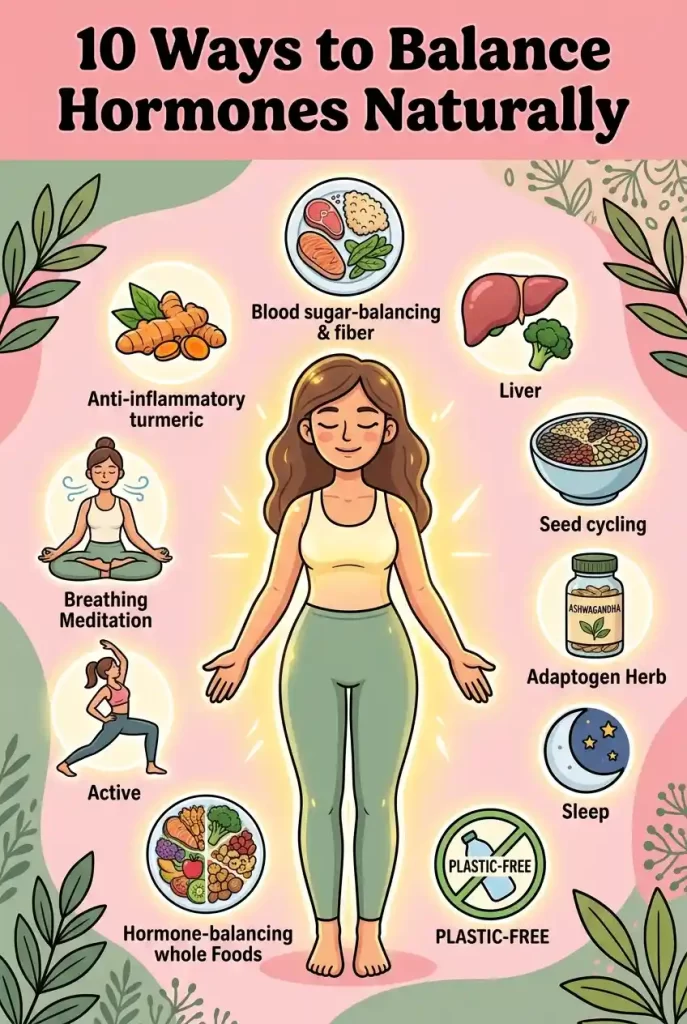
Hormones run almost everything — energy, weight, mood, sleep, skin, libido, fertility. When they’re in balance you feel like yourself. When they’re not, everything feels slightly off in ways that are hard to explain and even harder to fix, especially when a standard blood panel comes back ‘normal’ while you still feel terrible.
Natural hormone balancing isn’t about one supplement or one food. It’s about removing what disrupts hormones and consistently supporting what restores them. Some of these changes produce noticeable results within 1 to 2 weeks. Others take 2 to 3 months to fully establish. All of them work together — which is why doing several at once produces better results than trying them one at a time.
Why Hormones Fall Out of Balance in the First Place
The most common drivers of hormonal imbalance in modern life are chronic stress (which elevates cortisol and suppresses progesterone), blood sugar instability (which disrupts insulin and affects every other hormone downstream), environmental estrogens from plastics and synthetic fragrance, poor liver function (the liver is responsible for clearing excess hormones), and insufficient sleep (which disrupts the entire hormonal cascade that happens overnight).
Most hormonal imbalance is not a single-hormone problem. It’s a system problem. That’s why addressing one thing in isolation rarely produces lasting results — and why the approach below covers multiple angles simultaneously.
10 Ways to Balance Hormones Naturally
1. Stabilize Blood Sugar First
Blood sugar instability is the most underestimated hormonal disruptor. Every time blood sugar spikes and crashes, insulin spikes with it. Chronically elevated insulin drives testosterone up in women (worsening PCOS and acne), drives estrogen up by increasing aromatase activity in fat tissue, and suppresses progesterone. The fixes: eat protein and fat with every meal, never eat refined carbs or sugar alone, don’t skip meals, and eat within 1 hour of waking. These changes produce noticeable hormonal improvements faster than almost anything else — usually within 1 to 2 weeks.
2. Support the Liver
The liver is the primary organ responsible for metabolizing and clearing excess estrogen. When liver function is sluggish — from alcohol, processed food, medication, or simple overload — estrogen accumulates and estrogen dominance develops. Liver support for hormonal health: cruciferous vegetables (broccoli, cauliflower, Brussels sprouts) contain DIM, which actively helps the liver process estrogen. Milk thistle supports liver cell regeneration. Castor oil packs over the liver area 3 to 4 nights a week improve lymphatic circulation. Reduce alcohol — even moderate intake significantly impairs estrogen clearance.
3. Seed Cycling
Seed cycling is one of the most practical and underused hormone-balancing tools for women with cycles. Days 1 to 14 (follicular phase): eat 1 tablespoon each of ground flaxseeds and pumpkin seeds daily. Flax contains lignans that help modulate estrogen. Pumpkin seeds are high in zinc, which supports progesterone production. Days 15 to 28 (luteal phase): switch to 1 tablespoon each of sesame seeds and sunflower seeds. Sesame supports progesterone, and sunflower seeds are high in vitamin E which also supports progesterone. Takes about 3 months to see full results. Worth doing.
4. Adaptogenic Herbs
Adaptogens regulate the HPA axis — the stress response system that governs cortisol. Ashwagandha is the most studied for cortisol reduction and hormone balance: 300 to 600mg of KSM-66 extract daily. Maca root supports both estrogen and progesterone balance by acting on the pituitary gland. Vitex (chaste tree berry) specifically supports progesterone production and is the most targeted herb for luteal phase deficiency and PMS. Introduce one at a time and give each one 6 to 8 weeks.
5. Fix Sleep Before Everything Else
Growth hormone, melatonin, cortisol, leptin, ghrelin, and sex hormones all have rhythms set and regulated during sleep. Consistently sleeping less than 7 hours disrupts all of them simultaneously. Cortisol stays elevated. Insulin sensitivity drops. Progesterone production falls. No supplement or dietary change compensates for chronic sleep deprivation at the hormonal level. Sleep in a completely dark room. Keep consistent sleep and wake times. Cut screens 60 minutes before bed — blue light suppresses melatonin and delays the hormonal cascade that begins with sleep onset.
6. Reduce Xenoestrogens
Xenoestrogens are synthetic compounds that mimic estrogen in the body and worsen estrogen dominance. They are found in plastics (never microwave food in plastic), synthetic fragrance in personal care products, conventional pesticide-residue produce, and cosmetic ingredients including parabens and phthalates. Removing the biggest sources — switching from plastic to glass or stainless for food storage, choosing fragrance-free personal care products, and washing conventional produce thoroughly — makes a meaningful difference over time.
7. Eat Hormone-Balancing Foods Daily
Fatty fish provide omega-3s that reduce inflammation and support cell receptor sensitivity. Avocado provides the healthy fats needed for hormone synthesis — all steroid hormones are made from cholesterol and fat. Leafy greens provide magnesium, essential for progesterone production. Brazil nuts provide selenium, critical for thyroid hormone conversion. Berries provide antioxidants that protect the endocrine glands. Cruciferous vegetables support estrogen clearance through the liver. Aim for at least 3 of these food groups daily.
8. Exercise — But Match It to Your Cycle
High-intensity exercise every day elevates cortisol chronically, which suppresses sex hormones. The balanced approach: strength training 2 to 3 times a week, moderate cardio 2 to 3 times a week, and at least one full rest day. For women with cycles, reduce exercise intensity in the luteal phase (days 15 to 28). Walking, yoga, and light cycling are more supportive during this phase than HIIT.
9. Manage Stress Actively
Elevated cortisol steals the precursor molecule (pregnenolone) used to make progesterone, DHEA, and sex hormones — this is called the pregnenolone steal. Daily practices with documented cortisol-lowering effects: 10 minutes of slow diaphragmatic breathing (4 counts in, 6 counts out), cold exposure to face or hands for 30 seconds, time in nature, and magnesium glycinate 300 to 400mg before bed.
10. Reduce Inflammation
Chronic inflammation and hormonal imbalance feed each other. Anti-inflammatory priorities: omega-3 fatty acids daily, turmeric with black pepper, eliminating refined seed oils from the diet, reducing ultra-processed foods, and addressing gut health. These changes take 4 to 6 weeks to show measurable effects but produce lasting hormonal improvements.
Where to Start: The Priority Order
If doing everything at once feels overwhelming, start here in this order:
- Week 1-2: Stabilize blood sugar — protein and fat at every meal, no skipping, no refined carbs alone
- Week 2-3: Fix sleep — dark room, consistent timing, screens off 60 minutes before bed
- Week 3-4: Remove biggest xenoestrogen sources — switch plastic storage, go fragrance-free
- Month 2: Add seed cycling and one adaptogen
- Month 2-3: Layer in liver support, anti-inflammatory foods, and exercise adjustments
Most women notice meaningful improvement within 6 to 8 weeks of consistently following the first three steps alone. The rest accelerates and deepens those results over time.
The Short Version Eat protein with every meal. Sleep 7 to 9 hours in the dark. Remove plastics and synthetic fragrance. Try seed cycling for 3 months. Add ashwagandha or vitex depending on your symptoms. Exercise with intensity variation. Reduce refined seed oils. These seven things together address the root causes of most hormonal imbalance in women without a single prescription.