High cholesterol is often called a silent condition because it produces no obvious symptoms in most people — which is why it goes undetected for years. But the body does send physical signals when cholesterol levels have been elevated for an extended period. These signs are easy to miss or attribute to other causes.
Thank you for reading this post, don't forget to subscribe!Knowing what to look for — and taking action early — is what makes the difference between managing cholesterol naturally and needing medication. Here are the five physical warning signs and seven natural remedies that actually lower cholesterol levels.
5 Physical Signs of High Cholesterol
1. Xanthomas — Fatty Deposits Under the Skin
Xanthomas are yellowish waxy deposits of cholesterol that accumulate under the skin. They appear most commonly around the eyes (xanthelasma), on the elbows, knees, buttocks, or tendons. They look like small yellowish bumps or patches and are painless. Their presence is a strong indicator of significantly elevated LDL cholesterol. If you notice these deposits anywhere on your body, get a cholesterol test immediately — xanthomas indicate levels high enough to deposit in soft tissue.
2. Corneal Arcus — Grey or White Ring Around the Iris
A grey or white arc or complete ring around the colored part of the eye (iris) is called corneal arcus. In people under 45, this is a reliable indicator of elevated cholesterol — cholesterol deposits forming in the cornea. In older adults it is more common and less diagnostic. If you notice a ring around your iris and you are under 45, this warrants cholesterol testing.
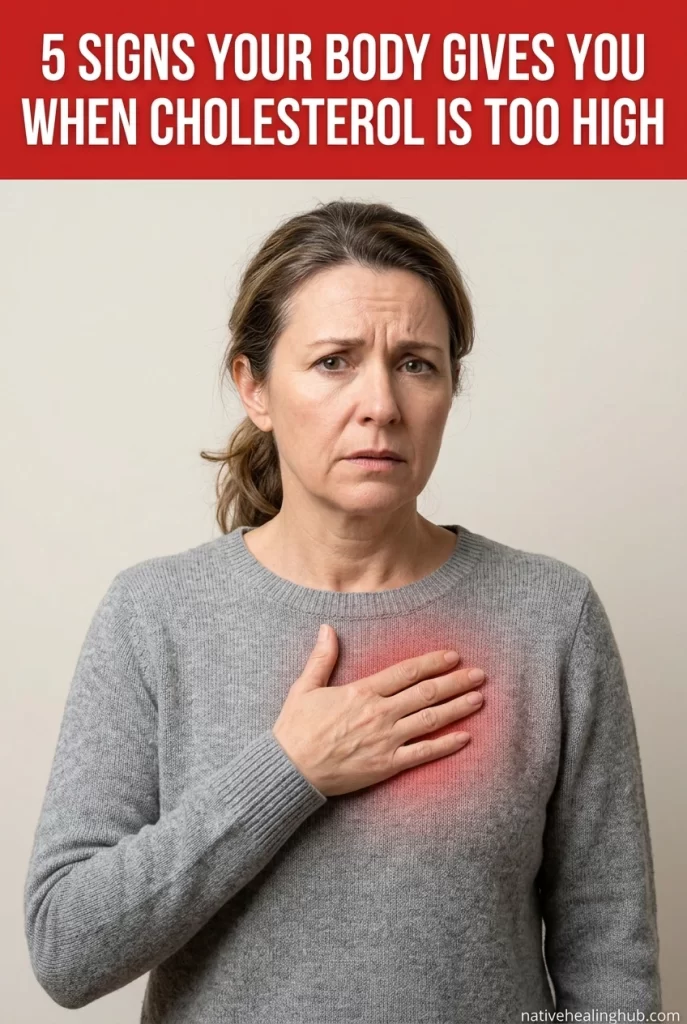
3. Chest Pain and Tightness
Chest tightness, pressure, or pain — particularly during physical activity or stress — can indicate that cholesterol plaque has begun narrowing the coronary arteries. This is angina, and it is a serious warning sign that requires medical evaluation. Do not attempt to self-treat chest pain. This sign means cholesterol has been elevated long enough to cause arterial narrowing and warrants urgent medical attention.
4. Leg Pain and Cramping During Walking
Peripheral artery disease (PAD) caused by cholesterol plaque buildup in the leg arteries produces cramping, aching, or fatigue in the legs — particularly the calves — during walking that improves with rest. This is called claudication. If you experience calf pain that consistently appears after walking a similar distance and relieves with rest, this pattern suggests PAD and warrants evaluation. This is a downstream consequence of long-term high cholesterol.
5. Fatigue and Difficulty With Exertion
When arteries are narrowed by cholesterol plaque, the heart and muscles receive less oxygen during exertion. Fatigue, breathlessness, or difficulty with physical activities that previously felt easy can indicate cardiovascular impact from high cholesterol. This is a later-stage sign — earlier intervention produces better outcomes.
7 Natural Ways to Lower Cholesterol
1. Oats and Beta-Glucan Fiber
Beta-glucan fiber in oats directly binds LDL cholesterol in the digestive tract and removes it before absorption. Studies consistently show 5 to 10% reduction in LDL with daily oat consumption. Eat half a cup of rolled oats daily — as overnight oats, porridge, or added to smoothies.
2. Psyllium Husk
Psyllium is the most concentrated source of soluble fiber available. One tablespoon in a glass of water daily reduces LDL by 5 to 10% in clinical studies. The fiber forms a gel that traps cholesterol and bile acids for elimination. Take with plenty of water.
3. Garlic
Raw garlic taken daily reduces total cholesterol and LDL while increasing HDL. The active compound allicin is heat-sensitive — cooking significantly reduces its cholesterol-lowering effect. Eat one raw crushed garlic clove daily or take aged garlic extract supplement.
4. Plant Sterols and Stanols
Plant sterols found in nuts, seeds, and fortified foods block cholesterol absorption in the intestine. Two grams of plant sterols daily reduces LDL by 8 to 10%. Sources: walnuts, almonds, flaxseeds, pumpkin seeds, and fortified plant milks.
5. Omega-3 Fatty Acids
EPA and DHA from fatty fish, flaxseed, and fish oil supplements reduce triglycerides significantly and have modest LDL-lowering effects. More importantly they reduce cardiovascular inflammation and protect arteries from cholesterol plaque damage. 1 to 2 grams of EPA and DHA daily.
6. Red Yeast Rice
Red yeast rice contains monacolin K — a natural statin compound. Studies show LDL reductions of 15 to 25% with consistent use. Available as a supplement. Important: should not be combined with prescription statins and should be taken under medical supervision due to its potency.
7. Exercise
Aerobic exercise raises HDL (good cholesterol) and reduces LDL and triglycerides more effectively than most dietary interventions. 30 minutes of moderate-intensity exercise 5 days a week produces significant cholesterol improvement within 8 to 12 weeks. Walking, cycling, or swimming all qualify.
When to See a Doctor
If you notice xanthomas, corneal arcus under age 45, chest pain, or claudication — see a doctor before relying on natural remedies. These signs indicate cholesterol has been elevated long enough to cause physical changes. Natural remedies work well for prevention and mild-to-moderate elevation. Severe or long-standing high cholesterol with physical signs requires medical evaluation and possible medication alongside natural approaches.
The Short Version
Watch for yellowish skin deposits, a ring around your iris, chest tightness, leg cramping during walking, and unexplained fatigue during exertion. Daily oats, psyllium husk, raw garlic, omega-3s, and regular aerobic exercise are the most effective natural cholesterol-lowering habits. Get a cholesterol test if you notice any physical signs — early action produces far better outcomes.