Not all belly fat is the same — and treating the wrong type with the wrong approach produces no results. Most people try generic diet and exercise and wonder why their belly doesn’t change. The reason is usually that the belly type they have is driven by a specific hormonal, digestive, or lifestyle cause that requires a targeted fix.
Thank you for reading this post, don't forget to subscribe!Identify which type describes you, then focus entirely on the solution for that specific type. Combining approaches from multiple types dilutes results. Here are the five most common types and exactly what to do for each.
The 5 Tummy Types
1. Hormonal Belly
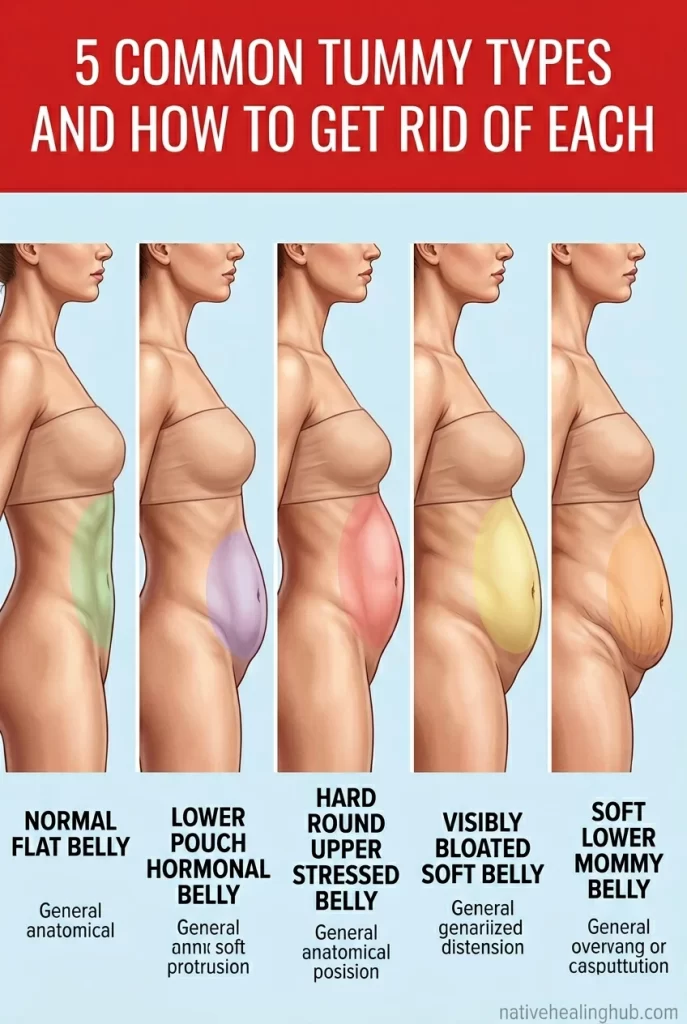
What it looks like: Lower belly pouch that won’t respond to diet or exercise. Fat concentrated below the navel, often combined with hip and thigh fat. Bloating that worsens before periods.
Cause: Estrogen dominance, low progesterone, insulin resistance, or cortisol elevation. The hormonal environment actively directs fat storage to the lower abdomen and prevents its release regardless of calorie deficit.
How to fix it: Address the hormonal root cause. Reduce estrogen dominance through DIM-rich cruciferous vegetables, milk thistle, and seed cycling. Reduce cortisol through ashwagandha, adequate sleep, and stress management. Improve insulin sensitivity through reducing sugar and refined carbohydrates, adding resistance training, and considering berberine or cinnamon supplementation. Generic cardio and calorie cutting alone will not move this belly.
2. Stressed Belly (Cortisol Belly)
What it looks like: Hard, round belly concentrated in the upper abdomen and around the waist. Arms and legs remain relatively lean. The belly feels firm rather than soft and jiggly.
Cause: Chronically elevated cortisol drives visceral fat storage specifically around the organs in the upper abdomen. Visceral fat is metabolically active and more dangerous than subcutaneous fat. Stress, sleep deprivation, and overtraining all elevate cortisol chronically.
How to fix it: Cortisol reduction is the priority — not more exercise. High-intensity exercise increases cortisol further and makes this belly worse. Switch to walking, yoga, and light resistance training. Prioritize 7 to 9 hours of sleep — this is non-negotiable for cortisol regulation. Take ashwagandha 300 to 600mg daily. Reduce caffeine after noon. Reduce alcohol completely.
3. Bloated Belly
What it looks like: Belly that is flat in the morning and significantly larger by evening. Changes size throughout the day. May be accompanied by gas, discomfort, and irregular bowel movements.
Cause: Not fat — this type is gas and fluid. Causes include food intolerances (lactose, gluten, FODMAPs), gut dysbiosis, low stomach acid, slow gut motility, or hormonal water retention before menstruation.
How to fix it: Identify and eliminate trigger foods — keep a food diary for 2 weeks. Take digestive enzymes with meals. Drink ACV in warm water before eating to support stomach acid. Add probiotics and fermented foods to improve gut microbiome. Peppermint and fennel tea after meals. Address hormonal water retention if bloating is cyclical.
4. Mommy Belly (Diastasis Recti)
What it looks like: A soft lower belly pouch that persists after pregnancy despite exercise and diet. May have a visible gap or ridge down the center of the abdomen when doing crunches. The belly appears to cone or dome when contracting.
Cause: Diastasis recti — separation of the rectus abdominis muscles during pregnancy. The connective tissue linea alba stretches and weakens, causing the belly to protrude forward without the normal muscular support. Standard crunches and sit-ups make this significantly worse.
How to fix it: Stop all traditional core exercises immediately — crunches, sit-ups, and planks worsen diastasis. Focus on transverse abdominis activation (deep core breathing), pelvic floor exercises, and specific diastasis recti rehabilitation exercises. See a pelvic floor physiotherapist for a personalized program. Results take 3 to 6 months of consistent correct exercises.
5. Alcohol Belly
What it looks like: Round protruding belly, often more pronounced in the upper abdomen. May be accompanied by puffiness in the face, poor skin quality, and fatigue.
Cause: Alcohol is processed by the liver as a priority — all other fat metabolism stops during alcohol processing. Alcohol also stimulates appetite, disrupts sleep quality, elevates cortisol, and contains significant empty calories. Regular alcohol consumption creates a perfect storm for abdominal fat accumulation.
How to fix it: Reduce or eliminate alcohol — this is the single most impactful change. Support liver recovery through milk thistle, dandelion root, and cruciferous vegetables. Reduce refined sugar simultaneously — the liver processes both. Improve sleep quality as alcohol disrupts sleep architecture even in moderate amounts. The belly responds relatively quickly to alcohol reduction compared to hormonal or stress bellies.
The Short Version
Lower belly pouch that won’t move — hormonal, fix estrogen and insulin. Hard upper belly with lean limbs — cortisol, reduce stress and sleep more. Flat in the morning, large by evening — bloated, find your food triggers. Post-pregnancy lower pouch — diastasis recti, stop crunches immediately. Round upper belly with alcohol use — liver and cortisol, reduce alcohol and support liver. Each type needs its specific fix — generic diet and exercise helps none of them significantly.