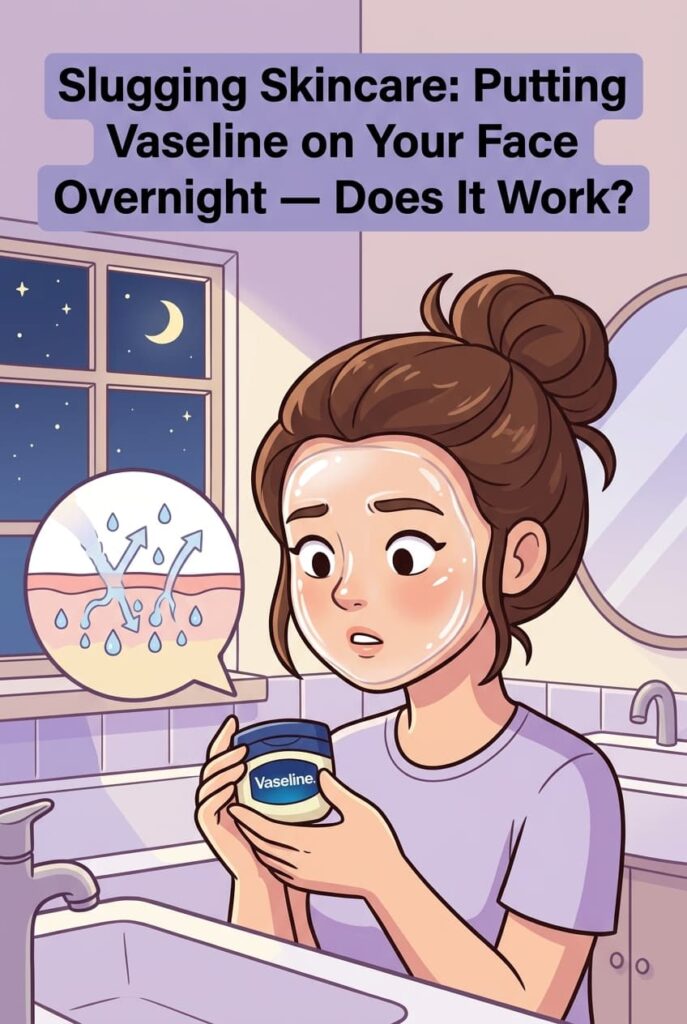
Slugging is the skincare trend where you apply a thin layer of petrolatum — usually Vaseline — as the very last step of your nighttime routine and sleep in it. It looks ridiculous. Your face shines like a slug. The name is accurate. The skin science behind it, however, is actually solid.
Thank you for reading this post, don't forget to subscribe!This isn’t a new concept — dermatologists have used petrolatum for wound healing and skin barrier repair for decades. The trend simply brought an old clinical tool into the mainstream. Here’s what actually happens when you do it, how to do it correctly, and the honest answer on whether it works for acne-prone skin.
What Slugging Actually Does
Petrolatum is the most effective occlusive moisturizer available — meaning it creates a physical barrier on the skin that dramatically reduces transepidermal water loss (TEWL). TEWL is the constant passive evaporation of water from skin into the environment. At night, when you’re not adding water back through drinking or environmental humidity, TEWL is one of the main reasons skin feels dry in the morning.
A thin layer of petrolatum reduces TEWL by up to 98% — no other commonly used skincare ingredient comes close. It doesn’t add moisture itself. It seals in the moisture that’s already in your skin and keeps it there overnight. The result is noticeably softer, plumper, more hydrated skin by morning — and with consistent use, improved barrier function over time.
The Right Way to Slug
Step 1 — Complete your normal routine first: Slugging goes on last — after everything else. Cleanse, apply your actives if you use them, apply moisturizer. Everything you normally do. The petrolatum seals all those products in underneath it.
Step 2 — Apply a very thin layer: This is where most people go wrong. You don’t need a thick coating — just enough to create a sheen. A pea-sized amount for the entire face is sufficient for most people. Press it gently into the skin rather than rubbing.
Step 3 — Sleep: That’s it. The seal works while you sleep. 6 to 8 hours of reduced TEWL allows skin to retain significantly more moisture than usual.
Step 4 — Morning rinse: A gentle rinse with lukewarm water removes most of it. Follow with your normal morning routine. No need to use a cleanser unless your skin feels heavy — most of it absorbs or rinses off easily.
Does Slugging Cause Acne?
This is the most asked question about slugging — and the answer is more nuanced than most guides give. Petrolatum itself is non-comedogenic. Dermatologists classify it as one of the least likely substances to clog pores because its molecules are too large to enter the follicle. It sits on top of the skin.
The caveat: if you have active breakouts or use heavy products underneath the petrolatum, slugging can trap bacteria and sebum that’s already on the surface — potentially worsening existing acne rather than causing new pimples. The solution is to slug only on nights when skin is clean and clear, and to skip slugging during active breakout phases. For people with dry or combination skin who get occasional breakouts, slugging on clear-skin nights is generally safe.
Who Benefits Most from Slugging
- Dry and very dry skin — the most dramatic and immediate results
- Dehydrated skin — slugging overnight visibly plumps skin by morning
- Damaged skin barrier — consistent slugging over 2 to 4 weeks actively repairs barrier function
- Mature skin with fine lines — reduced TEWL temporarily plumps fine lines
- Winter or cold climate skin — low humidity environments cause high TEWL; slugging compensates
- Post-procedure skin — after peels, laser, or dermaplaning, slugging accelerates healing
Who Should Skip or Modify Slugging
- Active acne or frequent breakouts — try slugging only on chin or cheeks avoiding T-zone
- Very oily skin — already produces significant sebum; full-face slugging may feel too heavy
- Fungal acne prone — petrolatum can create a warm moist environment that feeds Malassezia yeast
- Hot humid climates — TEWL is lower in humidity; the benefit is reduced
Natural Alternatives to Vaseline for Slugging
Aquaphor: Contains petrolatum plus lanolin and glycerin — slightly more moisturizing than plain Vaseline
Squalane oil: Much lighter than petrolatum, plant-derived (from olives or sugarcane), suitable for oily and acne-prone skin that can’t tolerate petrolatum
Shea butter: Natural occlusive with additional fatty acids that support the skin barrier — less effective than petrolatum for TEWL reduction but more tolerated by sensitive skin
Castor oil: Thicker than most plant oils, good occlusive effect, also has antimicrobial properties useful for acne-prone skin
The Short Version
Complete your normal routine. Apply a pea-sized amount of Vaseline across your face as the final step. Sleep. Rinse in the morning. Do this 3 to 4 nights a week for dry or damaged skin. Noticeable difference in softness and hydration within 3 to 5 nights. Consistent use over 2 to 4 weeks repairs barrier function. Skip during active breakouts or use only on dry areas if acne-prone.