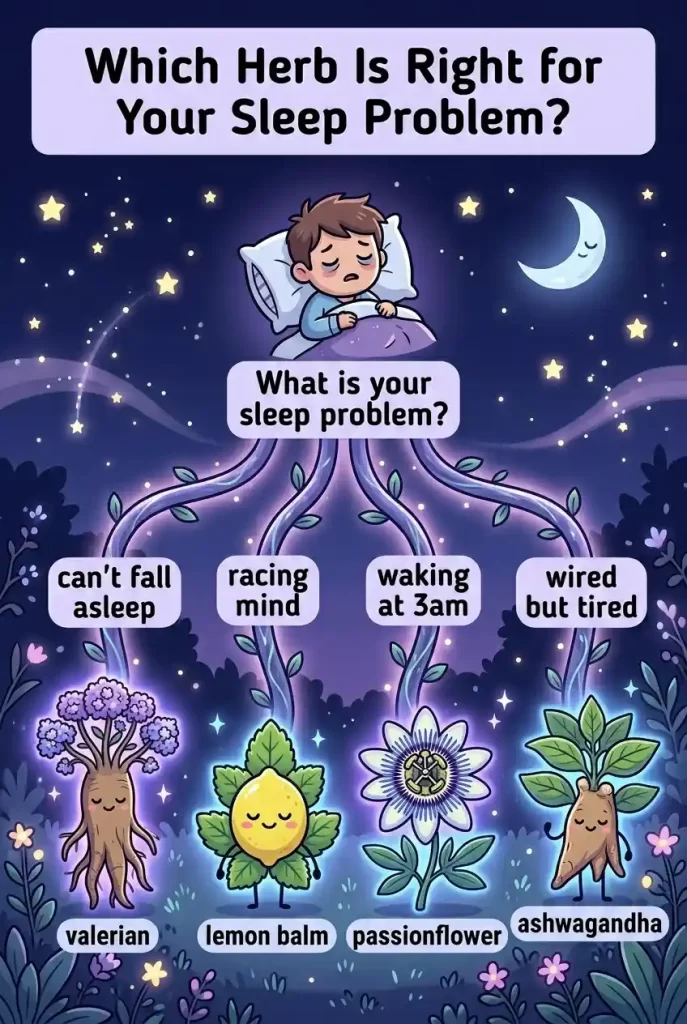
Lying awake at midnight staring at the ceiling is one kind of sleep problem. Waking up at 3am with a racing mind is another. Falling asleep but never feeling rested is a third. Different herbs work for different sleep issues — and knowing which one matches your problem makes the difference between something that helps and something that does nothing.
These seven herbs have clinical or well-documented traditional evidence. None of them are sedatives in the pharmaceutical sense — they work by calming the nervous system, reducing cortisol, or supporting the neurotransmitters that regulate sleep onset and depth.
7 Herbs for Sleep — Matched to Your Problem
1. Valerian Root — Can’t Fall Asleep or Stay Asleep
Valerian binds to GABA-A receptors and acts on serotonin receptors — the same pathways targeted by many sleep medications, but with far gentler effects and no morning grogginess when used at the right dose. Multiple studies confirm reduced time to fall asleep and improved sleep quality with 300 to 600mg of root extract 1 hour before bed. Takes 2 weeks of consistent nightly use to reach full effect. Best as a capsule or tincture — valerian tea is effective but the smell is notoriously unpleasant.
2. Chamomile — Mild Anxiety Keeping You Awake
Chamomile’s apigenin compound binds to benzodiazepine receptors in the brain, producing a mild sedative effect without dependency. It’s the gentlest herb on this list — ideal for mild sleep issues, stress-related wakefulness, and as a daily maintenance tea. Steep 2 teaspoons of dried chamomile flowers for 10 to 12 minutes, drink 30 to 45 minutes before bed. For stronger effect, combine with lemon balm.
3. Lemon Balm — Racing Mind at Bedtime
Lemon balm inhibits the enzyme that breaks down GABA, increasing calming neurotransmitter levels without direct sedation. It specifically targets the mental restlessness and thought-looping that keeps people awake — not sleepiness itself, but mental quiet. Best taken as a tea 30 to 60 minutes before bed: steep 1 to 2 teaspoons of dried lemon balm for 8 minutes. Combines well with valerian and chamomile for a complete sleep blend.
4. Passionflower — Waking at 3am With Anxiety
Passionflower works on GABA receptors with slightly stronger effect than chamomile. Studies show it reduces nighttime waking and improves sleep quality scores. Particularly effective for the anxiety-adjacent sleep disruption — waking in the early hours with a sense of dread or racing heart. Take as a tincture (1 to 2ml in water) or tea 30 minutes before bed. Effects are noticeable within the first night for many people.
5. Ashwagandha — Wired but Tired, Can’t Switch Off
Ashwagandha’s sleep benefit comes through cortisol reduction rather than direct sedation. High evening cortisol — the wired-but-tired feeling — is one of the most common causes of poor sleep quality. Ashwagandha taken 1 hour before bed reduces cortisol levels and allows the natural drop that should occur in the evening. A study using 300mg of KSM-66 extract twice daily showed significant improvements in sleep onset, sleep quality, and morning alertness after 8 weeks.
6. Lavender — Can’t Relax Enough to Sleep
Inhaled lavender acts through the olfactory system to reduce heart rate and blood pressure, creating physical relaxation that precedes sleep. Oral lavender (Silexan preparation) has clinical evidence comparable to low-dose benzodiazepines for sleep. For aromatherapy: a diffuser with 3 to 4 drops of lavender essential oil or a lavender sachet near the pillow. For stronger effect: oral lavender oil capsules 80mg before bed. One of the safest options for long-term nightly use.
7. Magnolia Bark — For Stress-Induced Sleep Disruption
Magnolia bark contains honokiol and magnolol, compounds that act on GABA and cannabinoid receptors. It reduces adrenaline levels, which is why it works particularly well for stress-related sleep disruption. Less well-known than the other herbs on this list but consistently effective in research. Take 200 to 400mg of extract 30 to 60 minutes before bed. Combines well with ashwagandha for people whose sleep issues are rooted in chronic stress.
DIY Bedtime Sleep Tea Blend Recipe
Combine equal parts dried: chamomile flowers, lemon balm, and passionflower. Add a smaller amount of dried lavender (about half the quantity of the others — it’s strong).
Steep 1 heaping teaspoon of the blend in hot water for 10 minutes. Cover the cup while steeping. Drink 30 to 45 minutes before bed. This blend covers GABA support (passionflower), mental calming (lemon balm), mild sedation (chamomile), and physical relaxation (lavender) simultaneously. It’s the most complete single-tea approach to sleep on this list.
Which Herb Is Right for You — Quick Match
Can’t fall asleep: Valerian root (capsule) + chamomile tea
Racing thoughts at bedtime: Lemon balm tea + passionflower tincture
Waking at 3am: Passionflower before bed + magnesium citrate
Wired but tired, can’t switch off: Ashwagandha + lavender diffuser
Stress is the main cause: Ashwagandha + magnolia bark
Want a gentle daily option: DIY bedtime blend tea
The Short Version For falling asleep: valerian. For racing mind: lemon balm. For 3am waking: passionflower. For wired-tired: ashwagandha. For daily gentle use: chamomile and lemon balm blend tea. Start with one, use it consistently for 2 weeks, and evaluate before adding another.