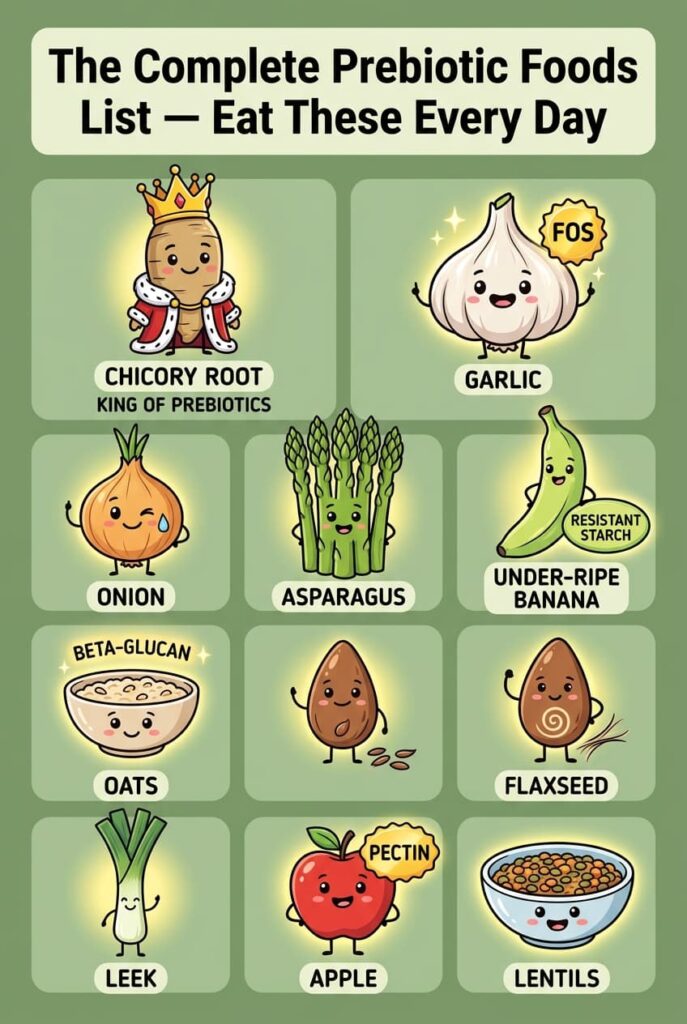
Everyone talks about probiotics. Barely anyone talks about prebiotics — which is backwards, because without prebiotics, probiotics have almost nothing to eat. Prebiotic foods are the fiber and compounds that feed beneficial gut bacteria. No matter how many probiotic supplements you take, if your diet is low in prebiotics, the bacteria won’t thrive.
Most people in the Western diet eat around 3 to 5 grams of prebiotic fiber daily. The recommended amount for meaningful gut health benefit is 15 to 20 grams. That gap explains a lot of the chronic gut problems, mood issues, and immune weakness that are so widespread.
Prebiotics vs Probiotics — The Difference
Probiotics are live bacteria found in fermented foods and supplements. Prebiotics are the food that bacteria eat — specific types of fiber and plant compounds that humans cannot digest but gut bacteria ferment and thrive on. You need both. Think of prebiotics as the fertilizer and probiotics as the seeds. Planting seeds without fertilizer produces weak results.
The Complete Prebiotic Foods List
Highest Prebiotic Content (eat daily):
- Chicory root — the richest prebiotic source, contains 41% inulin by weight. Used as a coffee substitute or added to recipes
- Jerusalem artichoke (sunchoke) — 16 to 20% inulin. Roasted, sautéed, or raw in salads
- Garlic — 9 to 16% prebiotic fiber, particularly fructooligosaccharides (FOS). Raw garlic has significantly more than cooked
- Onions — 2 to 6% inulin and FOS. Raw onion has more prebiotic content than cooked
- Leeks — similar prebiotic profile to onions, milder flavor
- Asparagus — 2 to 3% inulin, especially in the tips
Good Prebiotic Sources (eat regularly):
- Bananas — particularly underripe bananas, which have more resistant starch than ripe ones. Resistant starch is a potent prebiotic
- Oats — contain beta-glucan, a well-studied prebiotic that specifically feeds Lactobacillus and Bifidobacterium
- Apples — contain pectin, a soluble fiber with documented prebiotic effects
- Flaxseeds — contain both soluble and insoluble fiber; the mucilage in flaxseeds acts as a prebiotic
- Legumes — lentils, chickpeas, and kidney beans contain galacto-oligosaccharides (GOS), another major prebiotic
- Barley — high beta-glucan content, one of the best grain sources of prebiotics
Prebiotic Foods for Women Specifically:
- Jerusalem artichoke and chicory root specifically feed Bifidobacterium, which is associated with better estrogen metabolism
- Flaxseeds provide lignans that modulate estrogen alongside their prebiotic fiber
- Green bananas provide resistant starch that supports progesterone balance indirectly through gut microbiome improvement
- Asparagus contains inulin plus folate — particularly valuable for women of reproductive age
Simple Prebiotic Recipe: Morning Prebiotic Bowl
Combine in a bowl: half a cup of rolled oats (cooked or overnight), 1 sliced underripe banana, 1 tablespoon ground flaxseed, 1 tablespoon chopped walnuts, a drizzle of raw honey, optional: a tablespoon of plain kefir on top for combined prebiotic and probiotic effect.
This bowl delivers around 8 to 10 grams of prebiotic fiber — more than most people get in an entire day. It takes 5 minutes to prepare and can be made the night before.
How Much Do You Need and How Fast Does It Work?
Aim for 15 to 20 grams of prebiotic fiber daily. Start low — around 5 grams — and increase over 2 weeks. Jumping straight to high amounts causes gas and bloating as your gut bacteria adjust. The adjustment period is 1 to 2 weeks. After that, most people report significantly improved digestion, reduced bloating, better energy, and more stable mood — all downstream effects of a better-fed microbiome.
The Short Version
Garlic, onions, oats, underripe bananas, asparagus, and flaxseed are the most accessible prebiotic foods. Add at least 2 to 3 of these to every day. The morning prebiotic bowl covers most of your daily need in one meal. Pair with fermented foods for full prebiotic and probiotic coverage.